
CEO Karnataka official entry point
Use the state election office route for notices, electoral-roll resources, district guidance, and the current way Karnataka exposes older records.
State source
Karnataka
If you searched for 2002 voter list Karnataka, start with the official CEO Karnataka route and the record details rather than a random PDF filename. A 2002 electoral roll is a historical reference that may help you compare a name, relative name, locality, assembly constituency, or part number before a current SIR task. This guide explains how to find the right source, what to check when a direct PDF is unavailable, and why an old roll must not be treated as a current form or identity decision.
The safest result is not always a direct PDF button. Start with CEO Karnataka, confirm the district and historical roll context, and use the national Voters' Services Portal only for the service it actually provides. This page does not claim to host a permanent Karnataka 2002 PDF.
Use the state election office route for notices, electoral-roll resources, district guidance, and the current way Karnataka exposes older records.
Use the national voter-service route for current services, verification, or official routing when the service is available for your area.
Use the broad guide when you need the difference between an old electoral roll, a state source, a direct PDF, and a current SIR workflow.
The phrase 2002 voter list Karnataka usually points to an old electoral-roll reference, not a new voter-registration form. Someone may be comparing a family name, relative name, house or locality wording, assembly constituency, polling part, or an older record mentioned in a current SIR instruction. The historical roll can provide context, but it does not replace a current SIR enumeration form, a current electoral roll, a correction request, or an official identity decision.
Treat the search as a record-matching task. The words Karnataka and 2002 do not prove that a document is correct. A useful source should identify the publishing authority, roll year, district or local area, assembly constituency, part or polling identifier, language, and document context. If a file appears without an official page, treat it as an unverified lead and return to the CEO Karnataka route before using any information from it.
Begin at CEO Karnataka and look for a route that names electoral rolls, old rolls, revision records, district resources, or an official notice. The visible navigation may change, and a state service may route you through a search form instead of exposing one statewide PDF. That is why this page links to the official entry point rather than inventing a permanent download address.
The Voters' Services Portal is useful for current voter services and official routing, but it should not automatically be treated as a 2002 archive. Read the service description before entering information. If the state page sends you to a notice, district resource, or contact route, follow that path and save the source URL, page title, year, and check date beside any file you keep.
First, confirm that the page belongs to an official Karnataka election source. Second, write down the district or local area before selecting a result. Third, check that the document or search route identifies 2002 rather than a newer revision. Fourth, match the assembly constituency and part or polling identifier. Fifth, compare the document title, language, footer, and surrounding publication context with the source page. These checks are more reliable than choosing the first file that contains a familiar surname.
A historical search can fail even when the name looks right. District boundaries, constituency names, address spellings, and transliterations may differ from current records. Keep a note of which fields match and which remain uncertain. If the official route does not expose a downloadable file, use its search or contact instructions rather than switching to a guessed CDN path, a payment form, or a page that asks for unrelated personal data.
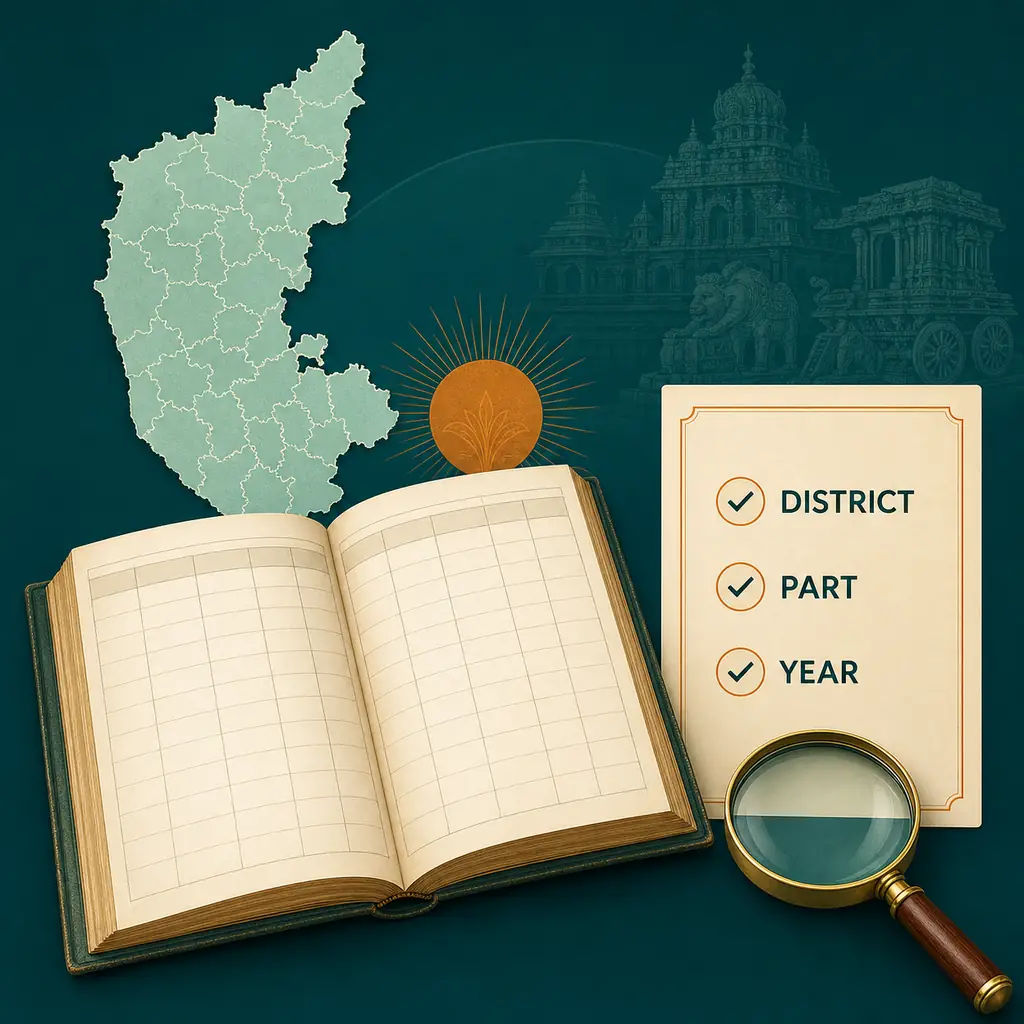
Old rolls are often organized by local geography, not by one simple statewide file. A search for a voter list 2002 Karnataka PDF may lead to a district or constituency route, and the correct part can be different even for two people in the same broad city. Current constituency names or boundaries may also differ from the labels used in 2002. Use the spelling and identifiers shown by the official source instead of normalizing them from memory.
Do not select a file because its thumbnail contains a known name or locality. Compare the district, assembly constituency, part number, polling area, roll year, language, and publishing context together. If the part is unknown, look for the official district instruction or contact route. A long-tail search such as 2002 voter list search by name in Karnataka can help narrow the task, but it is not proof that a generic file covers every voter in the state.
A name search can be helpful, but it is only one step in matching a historical record. Compare the elector name with the relative name, house or locality wording, district, assembly constituency, part number, and any serial or age context shown by the official record. Older documents may abbreviate names or use a different transliteration. A spelling difference does not automatically prove that two entries are unrelated.
A matching name alone does not prove identity. The goal is to identify the correct official record path without forcing a match. If a discrepancy could affect a current application, keep it visible and ask the relevant election office or follow the official correction or verification route. Do not upload scans, Aadhaar numbers, EPIC numbers, or family documents to an independent page for an automated match.
An official site may change navigation, require a notice page, publish a search form, or expose records only through a district route. A missing direct PDF does not prove that an unofficial mirror is safe. Return to CEO Karnataka, note the date of the source page, and follow its current search or contact instructions. The correct fallback is source verification, not a guessed path, a countdown mirror, or a promise that an old PDF is the latest accepted record.
If you already have a file, inspect its source context before relying on it. Record the URL, page title, document year, district, constituency, part, language, and any revision or publication reference. If those details cannot be verified, label the file unverified. Do not upload voter documents to an independent download page to obtain a match or a supposed safety check.
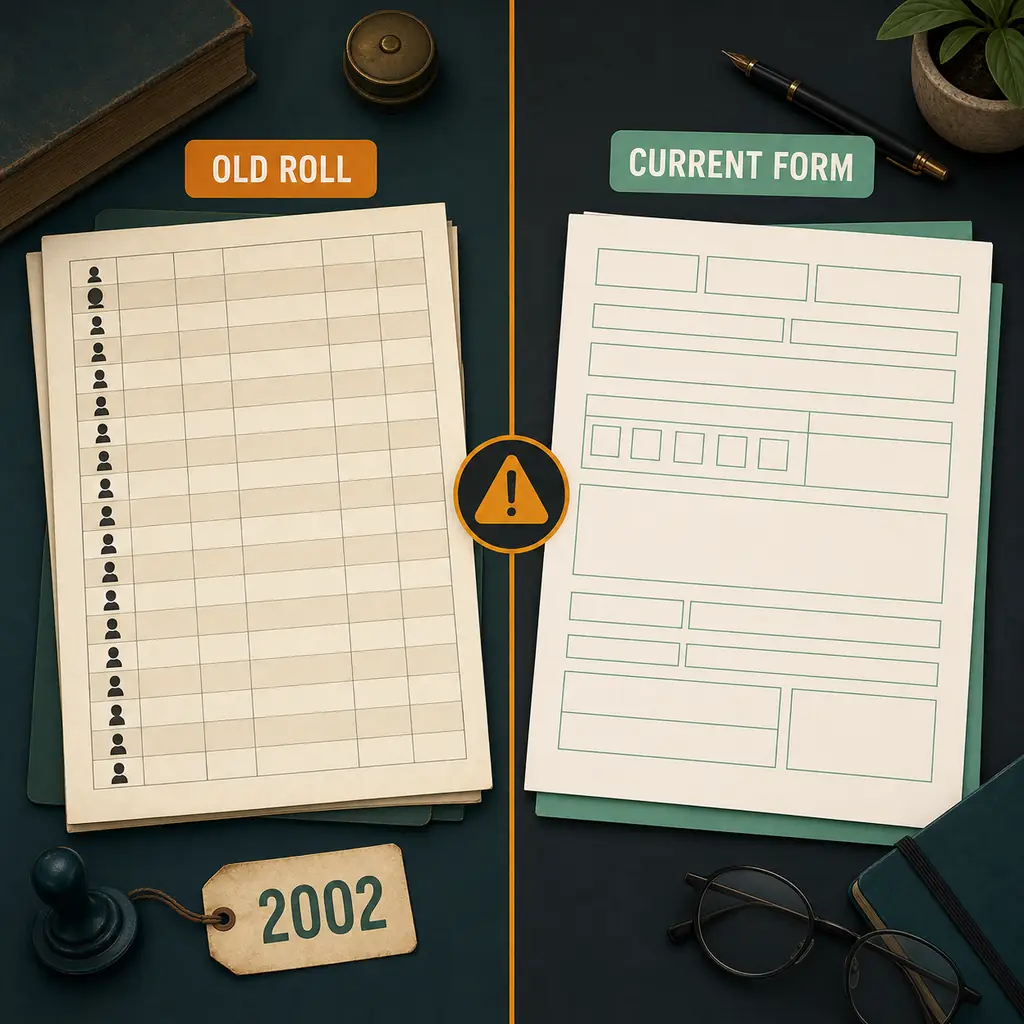
The 2002 voter list answers a historical reference question. A current SIR enumeration form answers a current process question. An official instruction may ask you to consult an old roll, but that does not make the old document the form you must submit. The current instruction may direct you to a printable form, the Voters' Services Portal, a BLO-assisted process, or a district notice.
Use the site's current Karnataka SIR form guide when you need to review or submit the present form, and return to this page when you need historical roll context. Keeping the jobs separate prevents an old record from being copied into a current form, prevents a current form from being treated as proof of a 2002 entry, and reduces the risk of following a stale deadline or unsupported eligibility claim.
Electoral rolls may contain names, household relationships, local addresses, and other personal context. Avoid uploading an old roll, Aadhaar number, EPIC number, phone number, or family document to a page that is not clearly operated by an election authority. A page can copy election terminology without being an official service. Use the official portal only when the service itself requires information, and check the domain before entering anything sensitive.
This guide does not verify voter identity, host a Karnataka government archive, certify a PDF, or decide whether a current form is accepted. It provides a source-first route for research. If a name, locality, or family connection does not match, keep the discrepancy visible and ask the relevant official office for the accepted next step rather than editing the old record or forcing a match.
These links are source entry points, not a claim that a permanent Karnataka 2002 PDF is currently available. Verify the page, year, area, and document context before using a file.
Start with CEO Karnataka and follow its current electoral-roll, district, notice, or contact route. A direct PDF should be used only when the official source connects it to Karnataka, the 2002 year, and the correct local area.
Use the official state route if it provides a name search, then compare the name with the relative, locality, district, assembly constituency, and part. A matching name alone does not prove identity.
No. A copied or renamed PDF without an official source page, year, district, constituency, and part context is unverified. Do not enter personal data into a page that only promises a download.
No. The old roll is a historical reference. The current SIR form belongs to a present enumeration or verification workflow. Use the current Karnataka SIR guide for the form and this page for historical source checking.
Older rolls can use abbreviations or different transliteration. Compare several fields and keep the mismatch visible. If it affects a current application, ask the relevant election office instead of forcing a match or editing the record.
Avoid uploading sensitive identifiers to unofficial pages. Use only an official election service when it clearly requires personal information, and verify the domain before entering it.