
ECI electoral roll reference
Use the Election Commission of India reference page to separate electoral-roll information from current forms and unofficial copies.
Official
ECI
A 2002 voter list search by name for an SIR check starts with an official election route, not a copied PDF. A familiar name is only a clue: verify the state, district, assembly constituency, part number, relative details, and source before relying on an old entry. This guide shows the search path, seven checks that reduce false matches, and what to do when no result appears. A historical match does not prove current registration or identity.
The historical search service and old-roll PDFs can change by state, revision stage, and constituency. Start at an official election source, use only the fields shown there, and keep this page as a route guide. It does not host voter records, verify identity, or replace a current SIR instruction.
Use the Election Commission of India reference page to separate electoral-roll information from current forms and unofficial copies.
Check the national voter-service entry point when the current search or state route sends you online.
Use the existing ECI SIR search entry when it is available for your state, year, and record type.
A name search can help you locate a historical electoral-roll entry that may be relevant to an SIR instruction. It can show that a similar name appeared in a particular state, constituency, part, or family context at the time covered by the roll. That is useful evidence for checking continuity, but it is not an automatic identity match and it does not prove that the person is currently registered at the same place.
The correct first move is therefore source verification, not downloading the first PDF that contains a familiar spelling. A current SIR form, a 2002 roll, and a present-day electoral search are different things. Use the historical record only for the purpose described by the official notice, and follow the current portal or State CEO instruction for any submission, correction, deadline, or accepted-document question.
Before you copy anything from a result, check the state and district, the assembly constituency, the polling part or equivalent local identifier, the name spelling, the relative name, the house or locality reference, and the year or source context. These checks work together. A familiar name in the wrong district can be a false match, while a small spelling difference in the right part may be a normal transliteration or an old record convention.
Record the source URL and the date you checked it, but do not publish a complete voter record in screenshots or messages. If the official interface provides a language, relationship, or constituency filter, use the values shown by that interface rather than guessing modern labels from memory. The goal is to narrow the record safely before deciding whether it is relevant to the current SIR workflow.
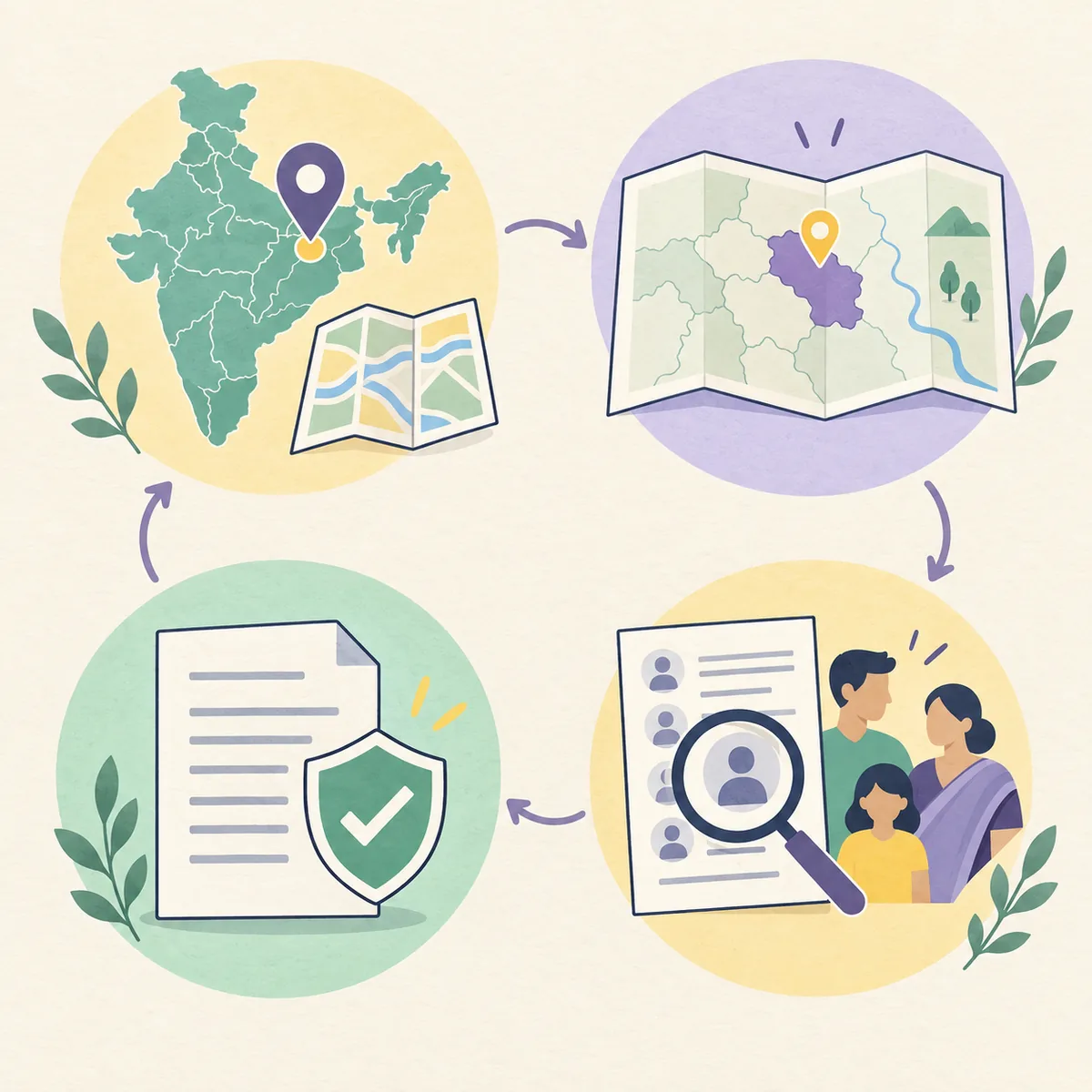
Open the ECI or Voters' Services Portal entry point first. If your State CEO page provides a dedicated SIR-2002 search link, follow that link and check the visible heading, domain, and service name before entering any information. Official forms can change their fields or route structure, so a copied URL from a social post may lead to an old page, an unrelated state, or a third-party form that only looks official.
Use the smallest amount of information needed to search. Start with the fields the service requires, then narrow the result with district, constituency, part, language, or relative details when offered. Do not submit Aadhaar, EPIC, phone number, or scanned family documents to an unofficial page. If the result is downloadable, keep the official source page alongside the file so the state and scope remain clear.
A blank result does not automatically mean that a person was absent from the historical roll. The search may be using a different transliteration, a changed district or constituency boundary, a different relationship field, or a part identifier that you do not yet know. Recheck the allowed spelling variation, the historical geography, and the fields shown by the official service. Do not keep submitting random personal details to unrelated websites just to force a result.
If the official search remains empty, use the state-wise guide to find the relevant CEO route and look for a district, constituency, part-level PDF, notice, or help-desk instruction. A PDF can be a useful fallback only when its source page, year, state, and local scope are visible. When the matter affects a current form or correction, ask the official BLO, ERO, State CEO help desk, or voter-service channel what alternative verification is accepted.

These three resources are often mixed together because search results use the same words: voter list, SIR, form, and download. Their jobs are different. A name search helps locate a historical entry, a PDF can preserve a part-level or district-level reference when the official source provides one, and the current SIR form is the document or workflow that the present notice asks you to complete.
Use the resource that matches the task instead of treating every file as interchangeable. If you only need to compare an old family or locality record, stay with the historical search. If you need to fill, sign, submit, or track a current request, return to the current SIR page and online route. The general 2002 voter list download guide covers source checks for PDFs, while the how to fill SIR form guide covers current field preparation.
Older electoral rolls may use abbreviations, local transliteration, shortened names, or a spelling convention that differs from a current document. Treat a small difference as a reason to compare more fields, not as an automatic rejection or acceptance. Look at the relative name, house or locality wording, part, serial context, and any age or language clue shown by the official record. Keep the original spelling in your private notes instead of silently rewriting it.
Historical geography also matters. Districts, assembly constituencies, polling parts, and locality names can change, so a current map label may not identify the 2002 record. The state-wise SIR form guide helps you move from a national question to the right State CEO entry point. For a local workflow, use the relevant state page, such as the Maharashtra SIR 2002 guide or the Karnataka 2002 voter list guide, rather than forcing a national PDF to fit.
A voter-list result may expose household details, locality information, or other personal context. Do not upload a complete roll page, EPIC number, Aadhaar number, phone number, or family document to an independent site that promises to unlock a PDF or find a match. A clean-looking download page is not proof that its form is connected to an election authority.
This site is an independent navigation guide. It does not host an official voter database, certify identity, or promise a permanent direct PDF for every state, district, or part. Before acting, confirm the source on ECI, the Voters' Services Portal, or the relevant State CEO website. If a date, deadline, accepted document, or correction route matters, use the current official notice rather than an old page, social post, or search snippet.
Use the official entry pages to confirm current availability, fields, state instructions, and any changed route. This guide does not mirror voter records.
Start from the official ECI or Voters' Services Portal route and use the SIR-2002 search entry when it is available. Enter only the fields shown by the official service, then compare state, district, constituency, part, relative details, and spelling before treating a result as relevant.
Recheck permitted spelling or transliteration variants, historical district and constituency labels, the part number, and the relative field. If the result remains empty, use the relevant State CEO route or official help desk. A blank result does not by itself prove that a person was absent from the historical roll.
No. It is a historical reference that may help with an SIR instruction. A name match must be checked against the full local context, and current registration or correction questions must be answered by the current official election service.
No. A verified old-roll PDF can help you read historical details, but it does not replace a current SIR enumeration form, online submission, correction request, or other current instruction. Use the resource that the official notice asks for.
Compare the relative name, house or locality, district, constituency, part, and other fields shown by the official source. Older rolls can use abbreviations or different transliteration. Keep both spellings in private notes and ask the official channel if the difference affects the current task.
Avoid uploading sensitive identifiers to unofficial download or search pages. Use an official portal only when the service itself requires the information, and confirm the domain, purpose, and privacy notice before entering personal details.